
Conversational flow is the journey a user undergoes during their interaction with a chatbot or email sequence, beginning from the initial contact and culminating in receiving all necessary answers or taking the desired action. This conversation is typically natural, engaging, and logical, making customers feel as though they are communicating with genuine customer support agents.
In this article, we’ll uncover the importance and key elements of conversational flow and show you how to build it for your business. We’ll also share some tips and use cases to inspire you.
Why are conversational flows important?
Whether you plan to develop conversational flows for chatbots, email sequences, sales funnels, or customer support, these are crucial for ensuring seamless customer experiences aimed at resolving problems. Here are some more reasons to consider them for various business purposes.
- Provide human-like experiences. Having well-structured and thought-out flows for your chatbots, email sequences, and sales funnels enables you to provide logical and natural interaction with users. By outlining all possible scenarios, you can ensure relevant responses, share educational content, update on delivery, onboard new users, and automate other processes. This human-like structure guides users comfortably and smoothly. Chatbots respond to users’ inputs using friendly language and adjust based on users’ messages.
- Improve engagement. When chats go smoothly, there’s no need for users to contact human customer support agents. They are more likely to interact with a chatbot and complete specific actions. A well-designed conversion flow enables you to establish trust, minimize drop-offs, encourage more clicks, and boost purchases. If users find it convenient to use your chatbots, they will likely use them to solve repetitive problems.
- Boost conversion rates. By providing relevant answers to users through a conversational flow, you can positively influence purchasing decisions. With a friendly language and proper responses, you can achieve your goals faster without needing to connect with human agents. More prospects will be able to convert into customers.
- Improve satisfaction. When you set up natural-like conversations for your chatbots, they can give relevant answers to repetitive and more complex questions. It helps you provide around-the-clock support so users don’t have to depend on their time zones. If your bot can handle these tasks smoothly, it results in higher satisfaction and loyalty.
- Improve efficiency. By automating repetitive tasks, you can significantly improve team productivity and efficiency. Setting up chatbots for FAQs, onboarding, and qualifying leads enables you to reduce the overload and focus on solving more complex tasks. Your team won’t need to get distracted with FAQs when there are many urgent issues to address. It results in higher satisfaction for leads, as they receive instant responses, and for customers who require help with complex issues.
Now that you understand the importance, it’s time to explore the key elements of a conversational flow, so you know where to start.
7 Key Elements of a Conversational Flow
Every conversational flow contains all the necessary elements to guide users through the sales funnel, whether using a chatbot, email sequence, live chat, or other channels. If you consider developing a flow, you should be aware of its elements. You’ll find them below.
- Logical sequence. The flow should be logical, guiding users toward the desired action step by step. It should start with a greeting and then proceed to asking relevant questions. They will help identify users’ problems and resolve them. The conversation needs to proceed smoothly, one step at a time, without jumping from one topic to another or providing too much information that people don’t really need at this stage.
- A well-defined purpose. Every chat should have a clear goal. Whether your chatbot assists, informs, or qualifies, you need to outline it in your flow. Depending on the purpose, you’ll need to craft your flow accordingly.
- Natural language. Teach your chatbot to use natural, human-like language that makes users feel like communicating with real people. Use everyday words and phrases to sound closer to your audience and make everything clear. There’s no need to include technical jargon in simple conversations. Besides, your tone matters a lot, so ensure matching it with the users.
- User intent recognition. A chatbot should be ready to understand what users want and provide relevant responses. Whether prospects want to receive information, schedule an appointment, or seek assistance, a conversational flow should encompass these aspects and convey the right messages. For this purpose, you need to use keyword recognition or AI/NLP to guide the conversation.
- Visible CTAs. Add clear call-to-action buttons to help users proceed to the next step. They are a must for guiding people toward receiving what they need. You can add buttons that provide information, allow users to make appointments, purchase products, receive updates on delivery, and more. You should always tell what to do next with your CTAs to encourage action rather than dissatisfaction.
- Human handoff. Always include a human handoff option in case something goes wrong. This will help users during emergencies when a chatbot provides irrelevant information or makes it impossible to solve problems.
- Personalization. The flow should use people’s data to personalize communication with them. Addressing them by name and leveraging other details enables you to feel closer to your prospects and deliver messages tailored to them.
Now that you know the main elements of a conversational flow, it's time to proceed to the next section to find out how to build it for your business purposes.
How to build an effective conversational flow?
- Identify your key goals
- Understand your target audience
- Outline the user journey
- Create logical and natural dialogues
- Take advantage of smart branching
- Take into consideration error handling
- Consider personalization
- Add visible CTAs
- A/B test your flows
- Monitor and improve
If you are considering an effective conversational flow for your business, there are several steps you need to take. We’ll provide you with a short guide on this process.
- Identify your key goals. Before developing the flow, work with your team to determine what you want users to do. This conversation should provide value to people, whether they want to schedule an appointment, check on the delivery status, or find answers to frequently asked questions.
- Understand your target audience. To develop an effective conversational flow, it is essential to understand your buyer persona. Behavior, preferences, problems, needs, location, and language are essential when it comes to building a chatbot or email sequence. With this information, you are more likely to craft a bot that serves its primary purpose and enables users to solve their problems effectively. Consider grouping flows based on users’ customer journey.
- Outline the user journey. Mapping out a decision tree with all possible scenarios for the conversation enables you to create a flow that covers a range of points. Begin with the entry point where the conversation starts, and then proceed to address user questions. Consider the responses and CTAs, and conclude the chat with an exit point, whether it’s the end of the conversation or the point at which the chat is forwarded to a human agent.
- Create logical and natural dialogues. Once you begin creating dialogues, ensure that you use simple, everyday language. There’s no need to use complex words to describe processes unless required. Consider asking one question at a time to gather more information about users’ issues. Quick buttons, pre-filled responses, and confirmations are prompts that will enable you to simplify and speed up the process of getting help.
- Take advantage of smart branching. Always pay attention to users’ answers to guide them through the flow. For example, if you ask users what action they want to take and they respond that they want to check their flight status, it's necessary to follow a different flow. This approach ensures relevant answers and personalized experiences rather than generic messages that provide no value.
- Take into consideration error handling. When users type quickly, they may make typos or have unclear statements. That’s why you should give customers the space to write the question again, simply by clicking one of the options, or connecting with your human agent. This will significantly enhance your customer satisfaction with support.
- Consider personalization. If users have already contacted your company and you know their names, address them by name. Leverage their location, pain points, needs, and past behavior to provide tailored answers.
- Add visible CTAs. Your flow should always include call-to-action buttons to let users take the desired action. With their help, you can allow them to schedule a call, make a booking, check the delivery status, reschedule flights, and return items, among other tasks. These buttons and links should be placed strategically at decision points.
- A/B test your flows. Always test several versions before making them available to the public. A/B testing allows you to determine which CTAs, questions, or tone work best with your audience and select the most effective options. It will help you get better engagement with your chatbot.
- Monitor and improve. Your analytics are your key to obtaining valuable insights about drop-off points, conversion rates, and time spent in flow. Monitoring these metrics is a must to create an effective flow that assists and converts. You should also invite customers to assess their satisfaction with the chatbot. Metrics and feedback will help you identify problems, eliminate them, and optimize your flow for even better results.
Now that you know how to develop a conversational flow, it’s time to proceed to the tips. They will help you improve the flow in your chatbot.
8 Tips for Improving the Flow in Your Chatbot
You can find many recommendations for improving your chatbot flow, but not all of them are effective. That’s why we’ve decided to provide you with a list of basic yet useful tips. These will help you create chatbot conversations that are seamless and engaging. Let’s dive in.
- Create a warm welcome message. Create an appealing greeting to your flow, addressing users by name if possible. You should also unveil what the chatbot can do for customers and ask users what they want to do. Your message should be friendly to encourage people to engage with your company.
- Include quick replies and buttons. Users don't need to type long messages. It’s always better to include quick replies and buttons, allowing people to choose from the available options and take the necessary action. These clickable buttons significantly speed up chatbot responses and prevent possible errors caused by typos and confusing inputs. After welcoming users, you can share these quick replies.
- Ensure your messages are short and sweet. Your chatbot's answers should be concise and straightforward, without lengthy paragraphs and ambiguous language. It’s best to send a maximum of two messages at a time to avoid overwhelming users. Also, consider adding emojis to make your message sound more friendly and human-like.
- Ask one question at a time. There’s no need to rush when it comes to understanding what bothers users. It’s better to take your time by asking one question at a time. This approach will help prevent confusion for both users and chatbots. Once customers provide an answer, you can proceed to the next question to gain a deeper understanding of the situation.
- Get ready for unclear user inputs. There’s no way to create a perfect chatbot that won’t encounter errors. However, it’s crucial to anticipate such scenarios. When the inputs are confusing for the chatbot, you can add a message indicating that it’s unclear. Consider providing a menu with quick buttons so that users can easily choose among available options, or offer a human handoff if the option is not covered. This will help you avoid customer dissatisfaction.
- Add a human handoff button. It should always be accessible for users to connect to a human agent. This is because a chatbot can’t handle more complex issues customers might encounter. Therefore, it might be easier to offer such an option and have customers satisfied with your customer support. With SendPulse, you can develop conversational flows for Instagram, WhatsApp, Telegram, and Facebook Messenger, allowing users to connect with human agents when necessary.
- Take advantage of personalization. Personalize whenever possible and relevant. This approach helps you connect with users, making them feel as though they're communicating with real agents. Addressing users by name is essential for establishing relationships. To elicit better responses, it’s effective to utilize their location and past interactions.
- Add typing indicators. Consider mimicking human typing to make the conversation more alive and human. The flow will also appear more natural when conducted as a typical conversation. Avoid sending all the messages at once. It’s better to do it one by one to improve readability.
Now that you know how to improve your chatbot's flow with the tips, let’s proceed to the next section to explore some use cases and get inspired.
Use Cases for Conversational Flows in Chatbots
You can create conversational flows in chatbots for various purposes to enhance efficiency, productivity, and user satisfaction. We’ve listed the most common ones, along with examples, so you can get inspired.
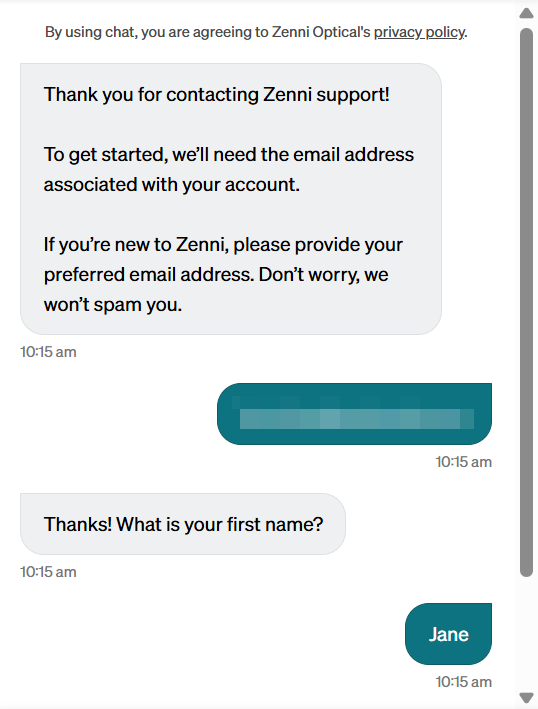
Lead generation
This flow is designed to collect prospects' contact information, including name, email, and preferences, through the chatbot. The bot asks simple questions, enabling your business to qualify leads. These might include questions related to budget, needs, pain points, company size, and other relevant factors.
Customer service
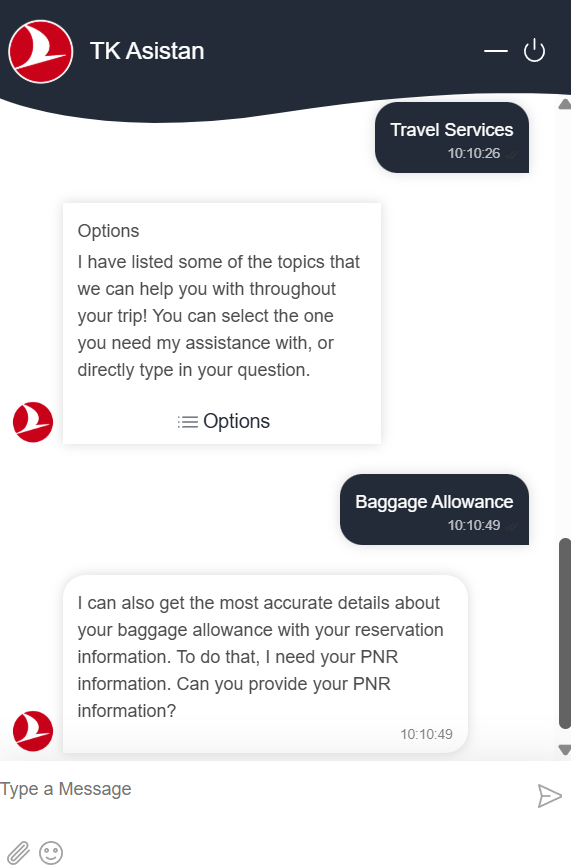
These chatbots handle repetitive questions regarding returns, delivery, and account help around the clock. This flow is designed to provide responses to FAQs and forward more complex issues to human agents. Customer support chatbots help reduce the workload on your team by managing everyday conversations with users regarding minor issues they encounter.
Below, you will find an example of a customer support chatbot from Turkish Airlines. The bot provides information about baggage allowance for the flight.
Shopping assistance
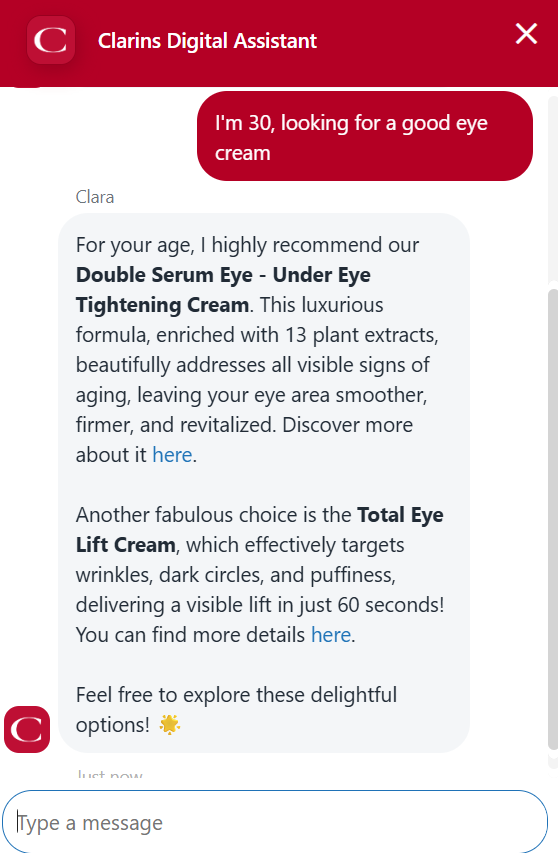
This conversational flow enables users to find the ideal product tailored to their specific needs and preferences. The bot searches for items with the necessary style and size, then recommends them to customers. In addition to enabling prospects to quickly obtain the right products, this chatbot also allows your business to upsell or cross-sell additional items.
Below, you can see how helpful Clarins' assistant is in searching for the right beauty products. The user types in the inquiry and gets relevant recommendations for eye cream.
Reservation
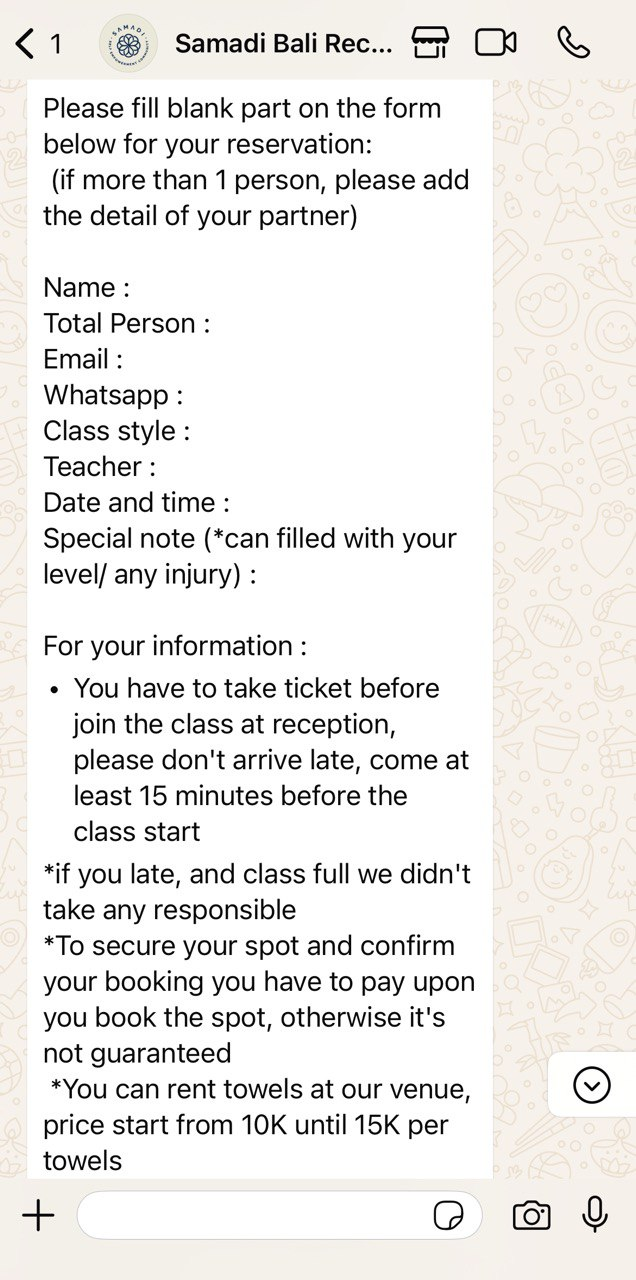
This type of chatbot allows users to book calls, demos, or consultations directly within the chat, eliminating the need to make a personal call. This is very convenient because it prevents any type of human error, like booking on the wrong day or time. These appointments are instantly synchronized with customers’ calendars to remind them of these events.
Below, you can see a reservation for a yoga class at one of the yoga studios. Users simply need to copy the message and insert their information.
Order tracking and post-purchase
The order tracking flow enables users to monitor their orders and receive updates on delivery status by entering their phone number or email. Post-purchase chatbots enable customers to request returns, cancel their orders, and provide feedback about products and the company in general. Additionally, they can complain about a product when it fails to meet their expectations.
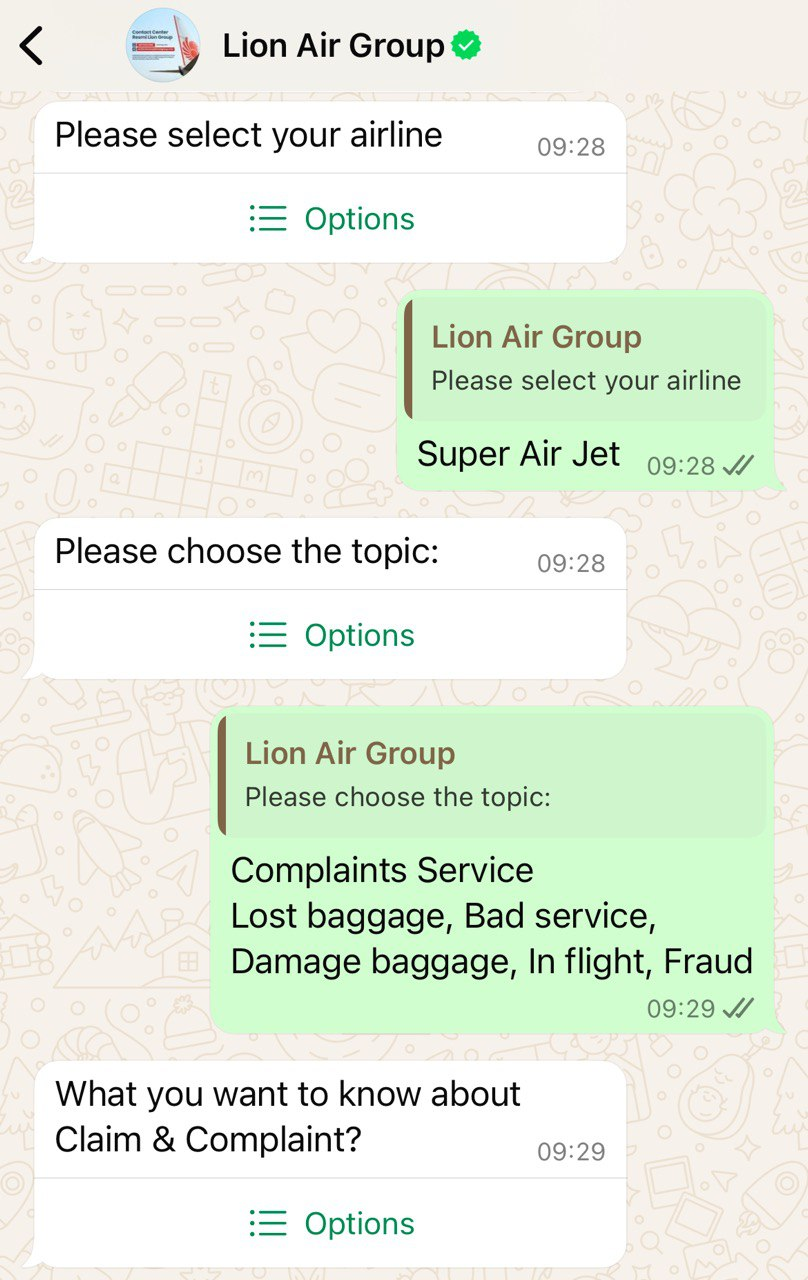
Below, you can see how to send a complaint to one of Lion Air Group’s airlines using the chatbot. Users can choose one of the options, select an airline, and send a complaint in seconds.
Developing a proper conversational flow is crucial for the effectiveness of your chatbot. You should be accurate in outlining every step of the flow, as it will not only influence customer satisfaction but also your business as a whole. Hope that our tips and examples gave you a hint on where to get started and create a flow that works for your target audience.
or